Coastal Hotel Interior Design: Essential Factors You Must Consider
Thứ 3, 14/04/2026
Administrator
296
Coastal hotels face unique environmental and design challenges due to their proximity to the sea. High humidity, salty air, and strong sunlight require careful selection of materials and thoughtful interior planning. At the same time, guests expect a relaxing, nature-inspired atmosphere that reflects the beauty of the seaside location. In this article, Ngoc Hoang Anh explores the essential factors that must be considered when designing coastal hotel interiors.
1. Humidity and Corrosion-Resistant Materials
Coastal hotel interiors are constantly exposed to high humidity, salty air, and changing weather conditions. These environmental factors can quickly damage standard furniture materials if they are not properly selected and treated. Therefore, choosing moisture-resistant and corrosion-proof materials is one of the most critical requirements in coastal hotel design.
1.1 Choosing moisture-resistant furniture materials
Furniture in seaside hotels should be made from materials that can withstand high humidity without warping or degrading. Engineered wood with proper sealing, treated solid wood, and moisture-resistant laminates are commonly used to ensure long-term durability in coastal environments.
1.2 Protecting metal components from corrosion
Metal parts such as hinges, handles, and structural frames must be treated with anti-rust coatings or made from stainless steel. This helps prevent corrosion caused by salt in the air, ensuring both safety and long-lasting performance of the furniture.
1.3 Surface finishes designed for coastal climates
Surface coatings play a key role in protecting furniture from moisture and salt exposure. High-quality finishes such as waterproof lacquers or UV-resistant coatings help maintain appearance, reduce wear, and extend the lifespan of interior elements in coastal hotels.
2. Natural Light and Heat Management
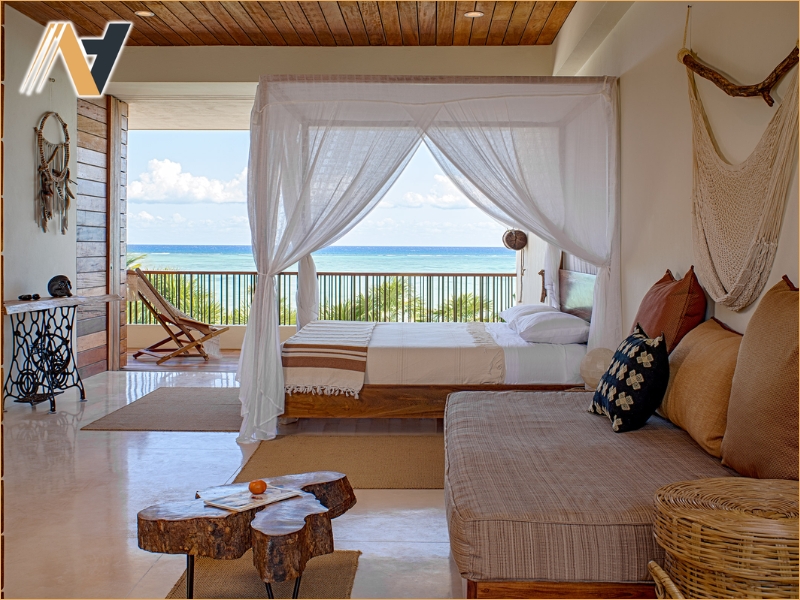
Coastal hotel interiors often benefit from abundant natural light and beautiful sea views, but this also comes with challenges such as heat gain and UV exposure. Proper design must balance openness and comfort to ensure guests can enjoy the scenery without experiencing excessive heat or glare inside the room.
2.1 Maximizing natural light without overheating
Large windows and open layouts are commonly used to capture natural light and highlight sea views. However, careful spatial planning and shading solutions are needed to prevent rooms from becoming too hot during peak sunlight hours.
2.2 Using UV-resistant curtains and glass
Specialized glazing and UV-protective curtains help reduce harmful sun exposure while maintaining brightness. These solutions protect both furniture and interior materials from fading or damage caused by prolonged sunlight.
2.3 Balancing brightness and guest comfort
Lighting design should ensure a comfortable indoor atmosphere throughout the day. Combining natural light with adjustable artificial lighting allows hotels to maintain visual comfort while enhancing the relaxing coastal ambiance.
3. Coastal-Inspired Color and Design Palette
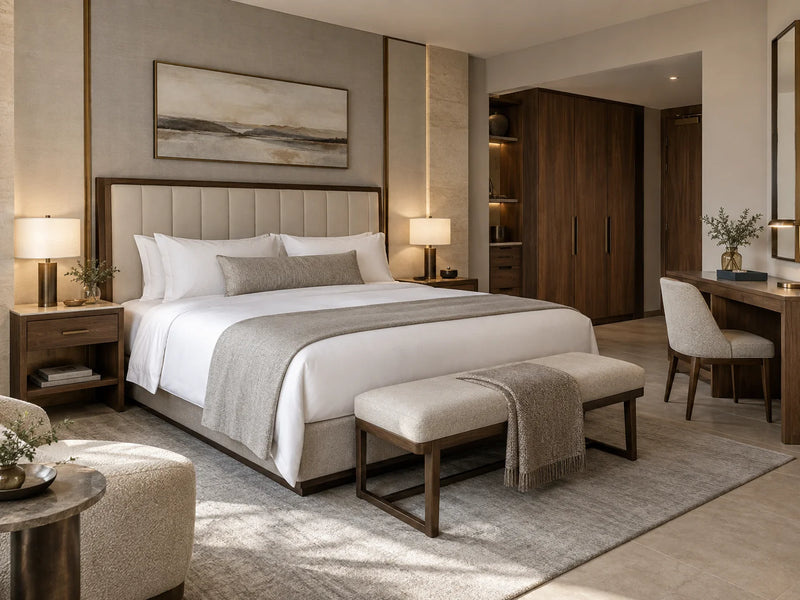
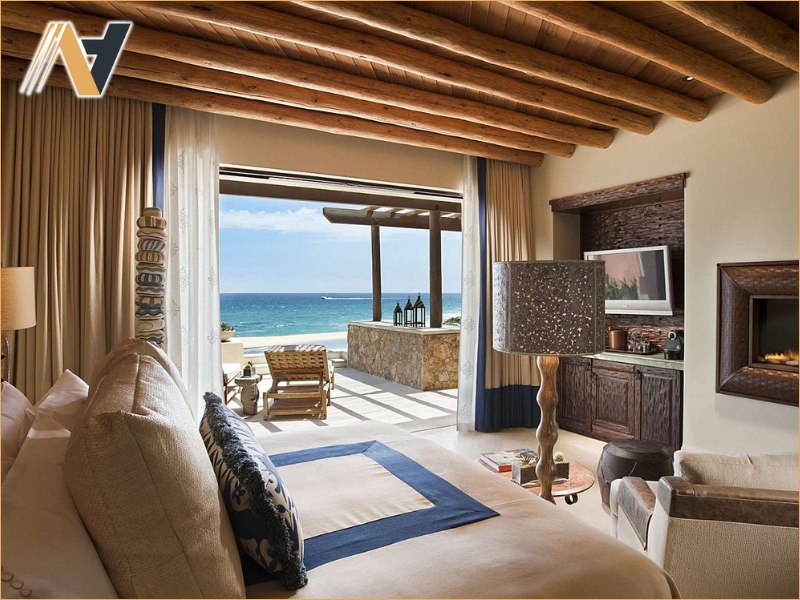
Color plays a key role in shaping the atmosphere of coastal hotel interiors. The design palette should reflect the surrounding sea and natural landscape while maintaining a calm and relaxing environment for guests. A well-balanced color scheme helps reinforce the coastal identity without overwhelming the space.
3.1 Ocean-inspired neutral and blue tones
Soft blues, sandy beiges, and warm whites are commonly used to evoke the feeling of the seaside. These tones help create a fresh, airy atmosphere that connects the interior with the coastal environment.
3.2 Creating a calm and relaxing atmosphere
A coastal color palette should prioritize emotional comfort. Light and muted colors reduce visual stress and contribute to a peaceful environment, helping guests feel relaxed throughout their stay.
3.3 Avoiding overly dark or heavy color schemes
Dark or overly saturated colors can make coastal interiors feel closed and heavy, which contradicts the open and airy nature of seaside locations. Lighter tones are preferred to maintain spaciousness and visual harmony.
4. Durable and Easy-to-Maintain Furniture
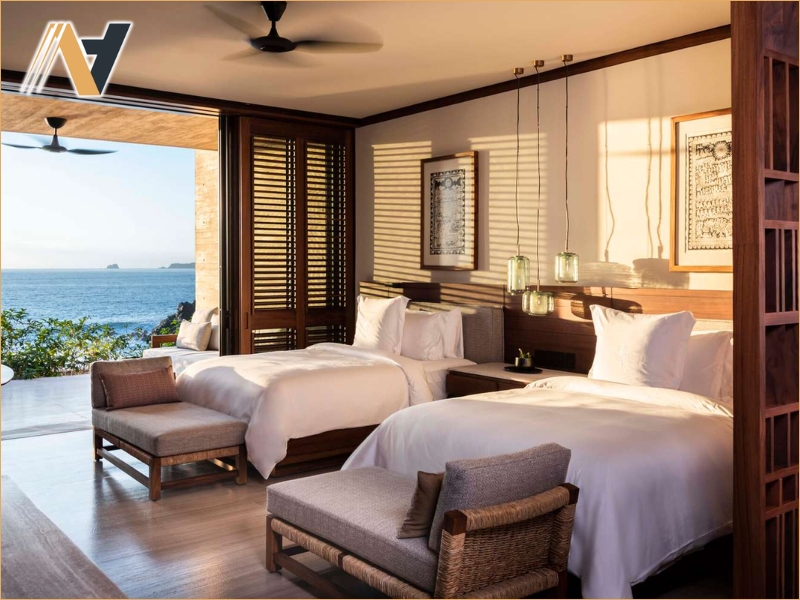
In coastal hotels, furniture is exposed to harsh environmental conditions such as humidity, salt air, and frequent guest turnover. Because of this, durability and ease of maintenance become essential requirements in interior design. Well-selected materials and construction methods help ensure long-term performance while reducing operational costs and maintenance frequency.
4.1 High-durability materials for frequent use
Furniture should be made from robust materials such as treated wood, high-pressure laminates, or metal with protective coatings. These materials help withstand daily wear and the challenging coastal environment without losing structural integrity or aesthetic quality.
4.2 Easy cleaning and salt-air resistance
Surfaces must be designed for quick and efficient cleaning, especially in environments where salt and moisture can accumulate. Smooth, non-porous finishes help prevent buildup and make routine maintenance easier for hotel staff.
4.3 Long-term maintenance considerations
Coastal hotel furniture should be designed with long-term upkeep in mind. Modular components, replaceable parts, and durable finishes help extend product lifespan and reduce the need for frequent replacements or repairs.
5. Guest Experience and Spatial Flow
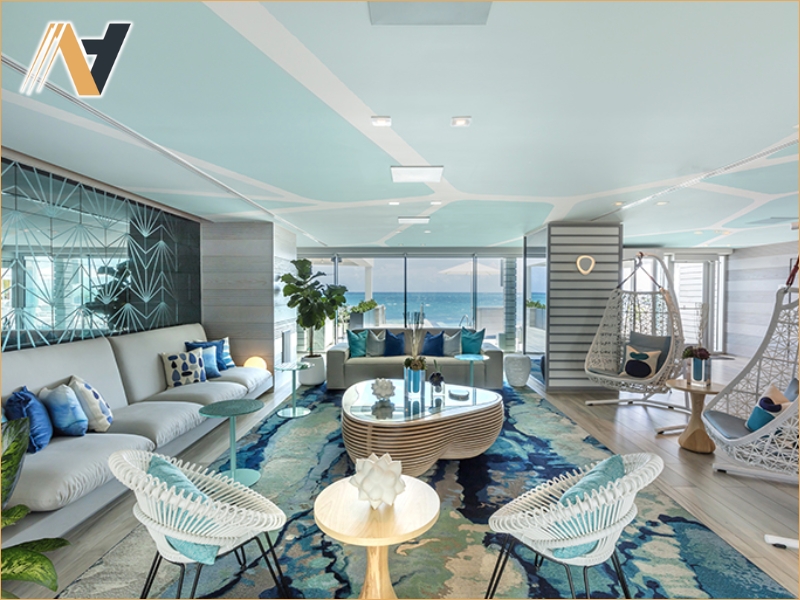
In coastal hotel design, creating a seamless and comfortable guest experience is just as important as selecting the right materials. The layout and spatial organization should enhance relaxation while allowing guests to fully enjoy the surrounding natural scenery. A well-planned flow between spaces helps maximize both functionality and emotional comfort.
5.1 Open layouts that enhance sea views
Rooms and public areas should be designed with openness in mind to fully capture ocean views. Strategic furniture placement and minimal visual barriers help maintain clear sightlines, allowing guests to feel more connected to the coastal environment.
5.2 Seamless indoor-outdoor connection
Coastal hotels often benefit from blending indoor and outdoor spaces such as balconies, terraces, or garden areas. Using large openings, sliding doors, and consistent design elements helps create a smooth transition between interior comfort and outdoor nature.
5.3 Comfort-focused furniture arrangement
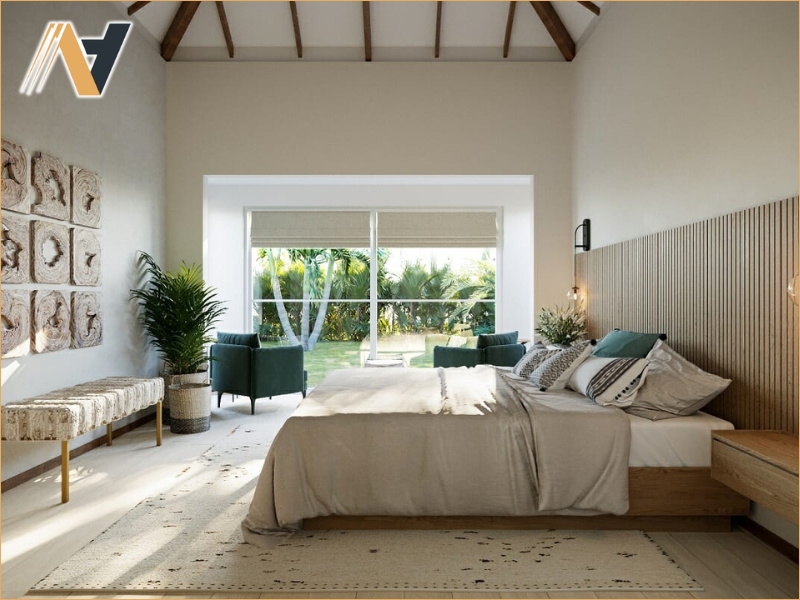
Furniture should be arranged to prioritize relaxation and ease of movement. Seating areas, beds, and functional zones must be positioned thoughtfully to support both usability and a calm, uncluttered atmosphere that enhances the overall guest experience.
Conclusion
Designing coastal hotel interiors requires a careful balance between aesthetics, durability, and environmental adaptation. From selecting humidity-resistant materials and corrosion-proof components to optimizing natural light and spatial flow, every detail plays a crucial role in ensuring long-term performance and guest satisfaction.
At the same time, a well-chosen coastal-inspired color palette and thoughtful furniture arrangement help create a relaxing atmosphere that connects guests with the surrounding sea environment. When these elements are combined effectively, the result is a hotel space that is both visually harmonious and highly functional.
For hospitality projects seeking reliable and high-quality solutions, Ngoc Hoang Anh provides premium Vietnam hotel furniture designed to withstand coastal conditions while maintaining refined aesthetics and long-lasting durability. Contact us today for expert consultation and bespoke furniture manufacturing.
-----
NGOC HOANG ANH TRADING COMPANY LIMITED
Tax Code: 3702874413
Address: No. 288/28/10 Huynh Van Luy Street, Zone 7, Phu Loi Ward, Ho Chi Minh City, Vietnam
Warehouse: No. 1/91, Thuan Giao 02 Street, Binh Thuan 2 Residential Quarter, Thuan Giao Ward, Ho Chi Minh City, Vietnam
Phone/Whatsapp/Wechat: +84342076666
Email: info@ngochoanganh.com.vn