How Business Hotel Furniture Differs From Resort Hotel Furniture
Thứ 4, 28/01/2026
Administrator
317
While both business hotels and resort hotels operate under the hospitality umbrella, their interior priorities differ significantly. Guest expectations, length of stay, and daily activities shape how furniture is designed, specified, and manufactured. Understanding these differences allows hotel developers and operators to align interior investments with real operational needs. In this article, Ngoc Hoang Anh outlines the key distinctions between business hotel furniture and resort hotel furniture.
1. Guest Behavior and Usage Patterns Shape Furniture Design
Furniture design in hotels begins with understanding how guests actually use the space. Business hotels and resort hotels serve fundamentally different travel purposes, and these behavioral patterns directly influence furniture proportions, functionality, and durability expectations.
1.1 Short-Stay Efficiency in Business Hotels
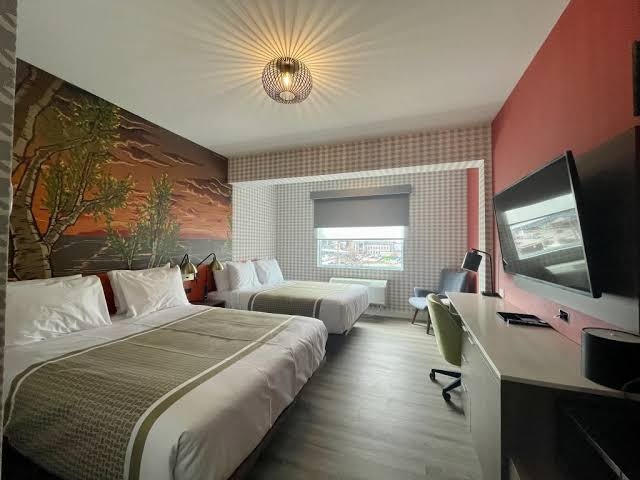
Guests in business hotels typically follow a fast, structured routine. Furniture is used intensively but for shorter periods, often supporting work, brief rest, and quick transitions. Desks, task chairs, and storage are expected to be immediately functional, compact, and intuitive, minimizing unnecessary movement or adjustment.
1.2 Extended Relaxation in Resort Environments
Resort guests interact with furniture for longer, more relaxed periods throughout the day. Seating, beds, and lounge pieces must support comfort over time, encouraging rest rather than efficiency. Furniture here becomes part of the experience, designed to slow the pace and enhance leisure.
2. Furniture Priorities in Guestroom Layouts
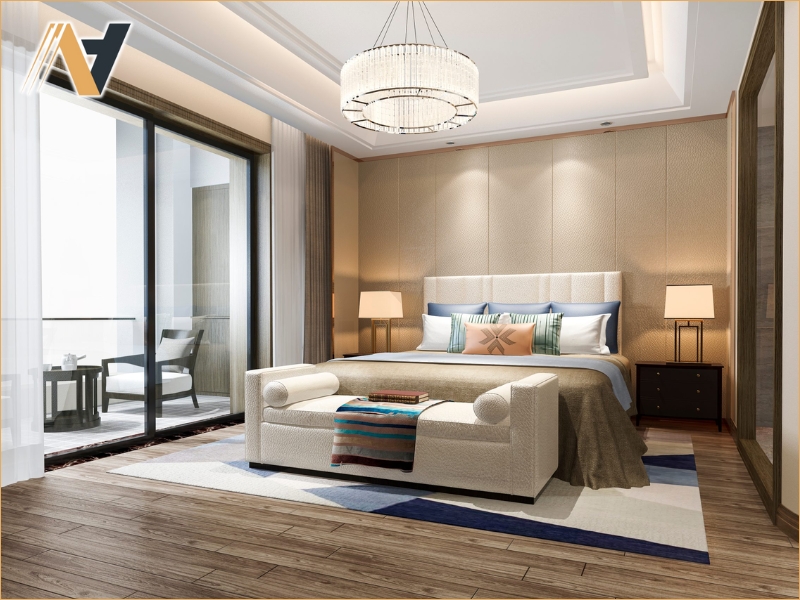
Guestroom layouts reflect the core function of each hotel model. In business hotels, furniture is arranged to support productivity and efficiency, while resort guestrooms prioritize comfort, openness, and sensory relaxation. These differing priorities shape not only what furniture is selected, but how it is positioned within the space.
2.1 Work-Focused Furniture in Business Hotels
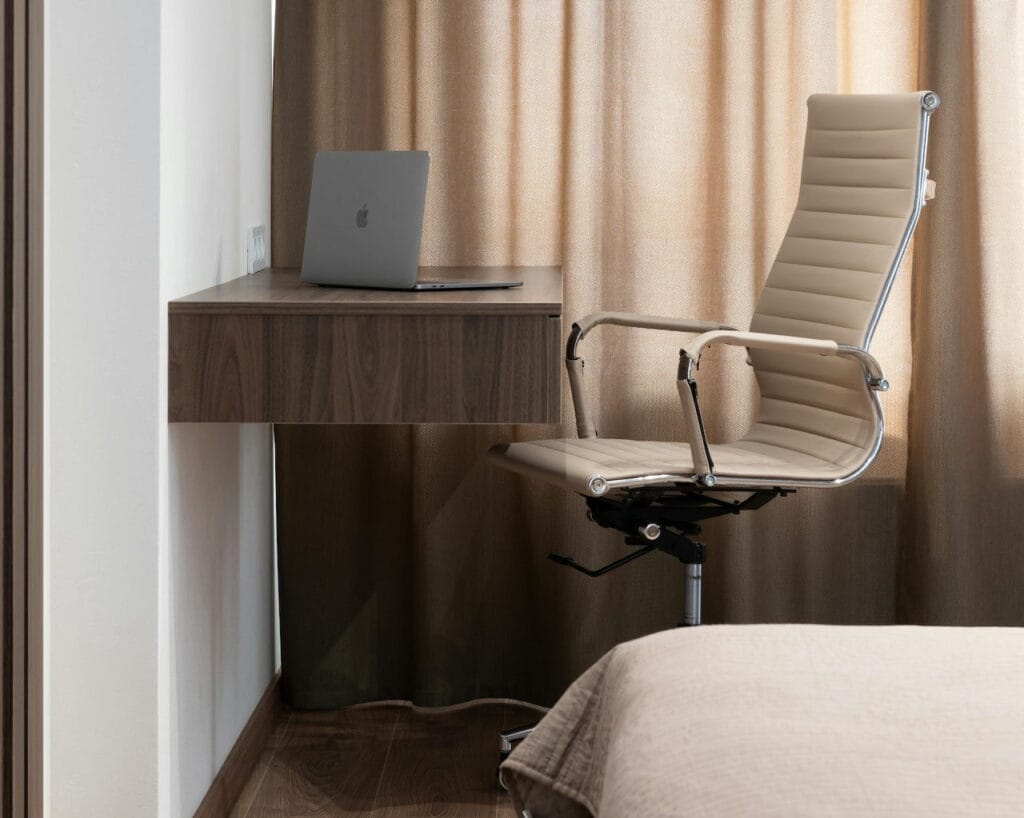
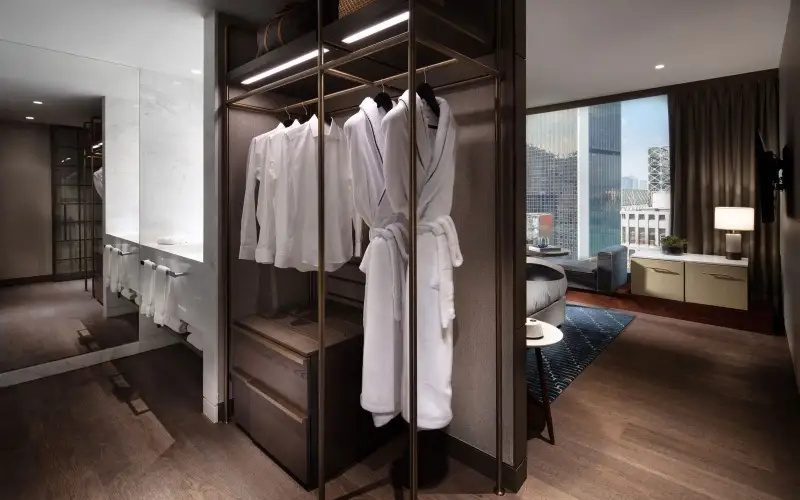
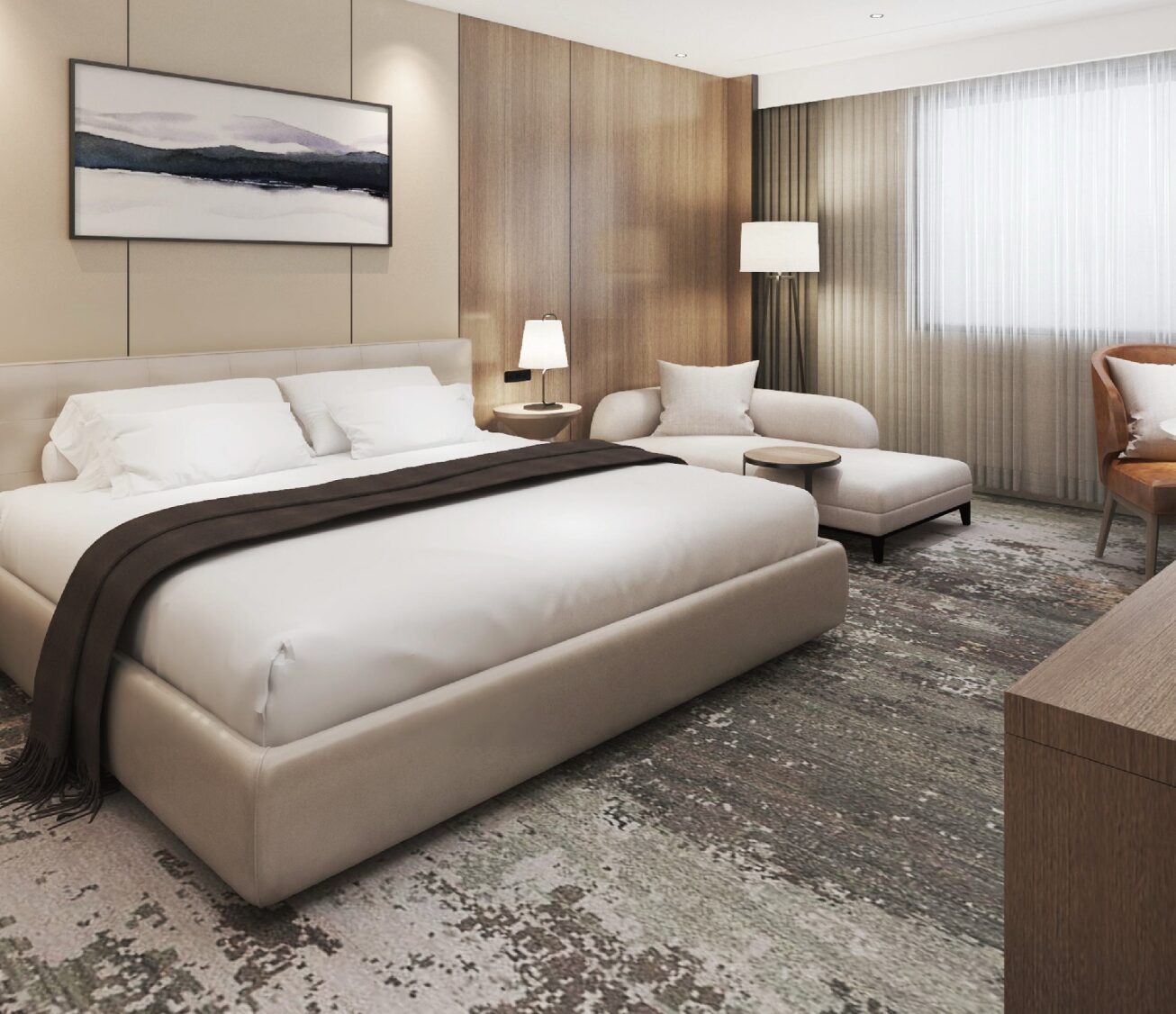
Business hotel guestrooms place strong emphasis on functional furniture such as work desks, ergonomic task chairs, and easily accessible storage. Furniture proportions are compact, circulation paths are clear, and every element is designed to support short, task-oriented use without distraction.
2.2 Comfort-Oriented Furniture in Resort Hotels
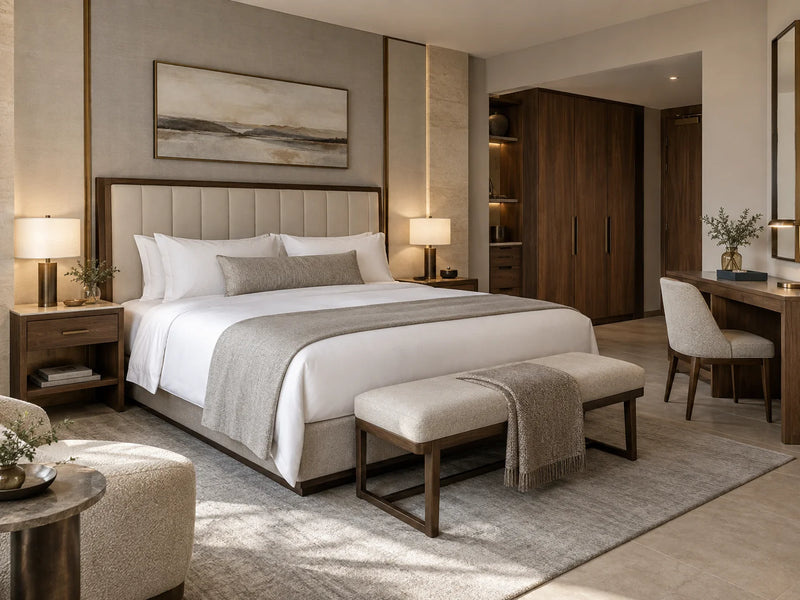
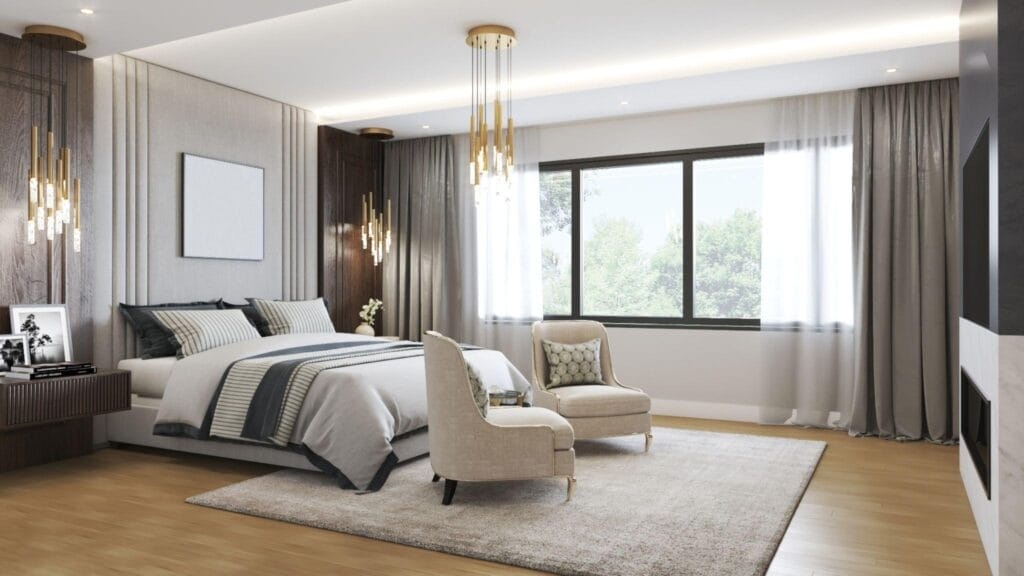
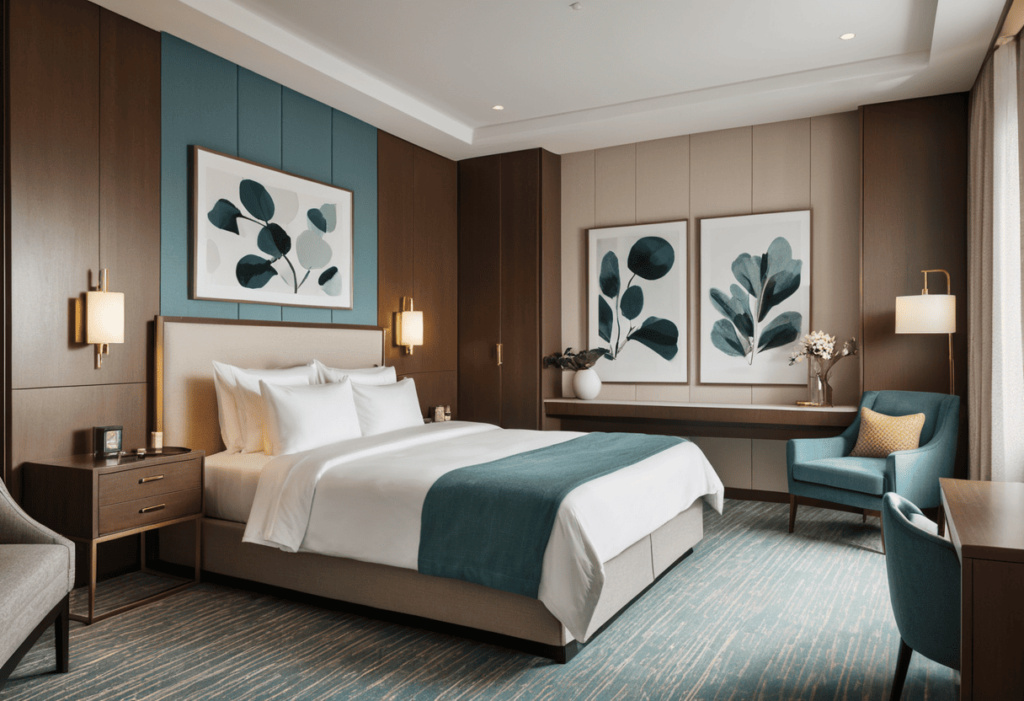
Resort guestrooms shift focus toward rest and leisure. Beds, lounge chairs, and daybeds are given visual and spatial prominence, encouraging guests to slow down and unwind. Furniture is often arranged to frame views and create a sense of openness rather than maximize efficiency.
2.3 Space Optimization Versus Spatial Openness
While business hotels optimize layouts to accommodate higher room counts and urban footprints, resort hotels allow furniture to breathe within larger spaces. This difference affects circulation, furniture scale, and the overall sense of freedom within the room.
3. Material Selection and Durability Expectations
Material choices in hospitality furniture are never purely aesthetic. They reflect how frequently furniture is used, the environment it operates in, and the maintenance strategy of the hotel. Business hotels and resort hotels demand different durability profiles, leading to distinct material specifications.
3.1 High-Durability Finishes for Urban Business Hotels
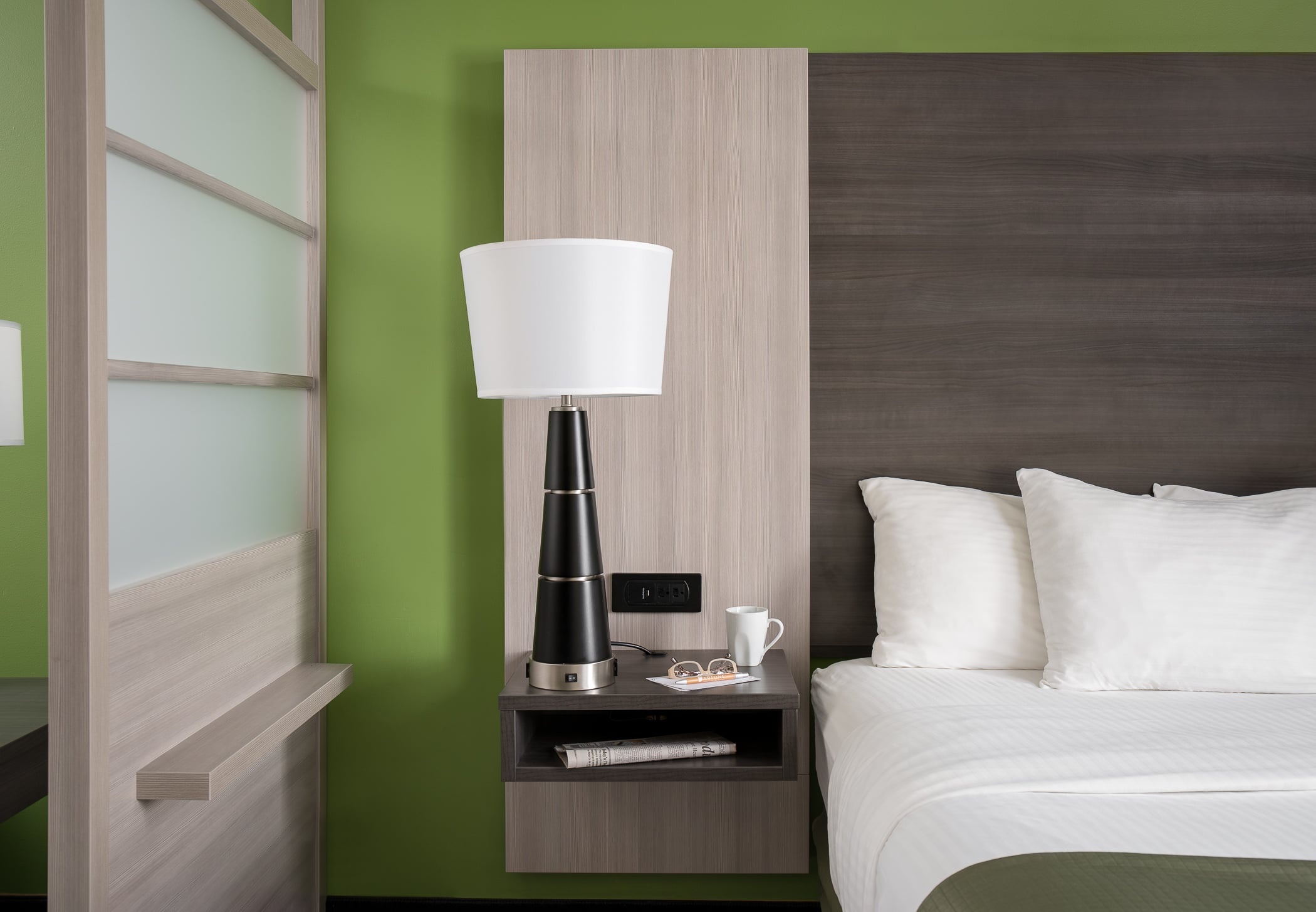
Business hotels experience constant turnover and intensive daily use. Furniture finishes must resist abrasion, staining, and frequent cleaning. Laminates, treated veneers, and performance upholstery are commonly specified to ensure longevity and consistent appearance.
3.2 Climate-Responsive Materials in Resort Settings
Resort environments often face higher humidity, salt air, and temperature variation. Furniture materials are selected to respond to these conditions, favoring moisture-resistant cores, breathable upholstery, and finishes that age gracefully rather than deteriorate.
3.3 Maintenance Cycles and Lifecycle Planning
Business hotels prioritize predictable maintenance cycles and ease of replacement. Resorts, on the other hand, focus on long-term material aging and visual patina, aligning furniture lifespan with the guest experience rather than rapid turnover.
4. Public Area Furniture Reflecting Brand Intent
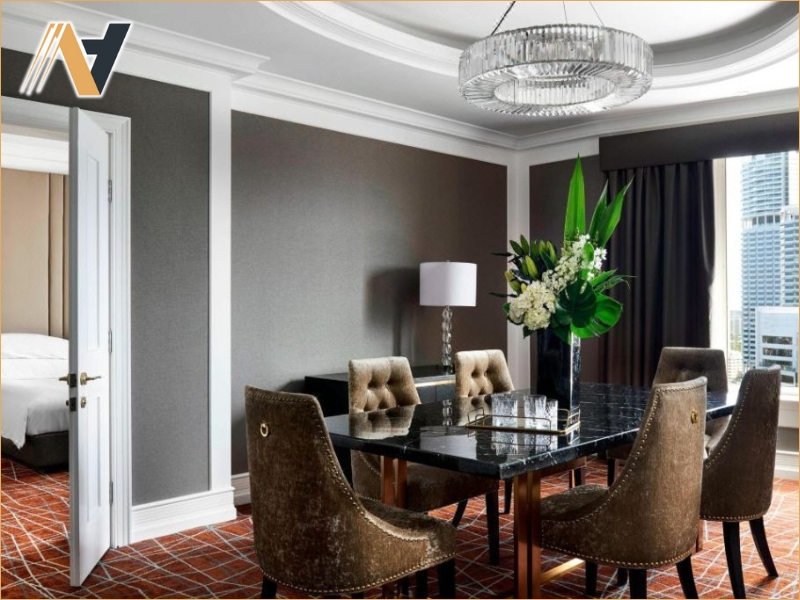
Public areas play a different strategic role in business hotels and resort hotels. Furniture in these spaces communicates brand intent while supporting specific patterns of use, from short transitional moments to immersive social experiences.
4.1 Functional Public Spaces in Business Hotels
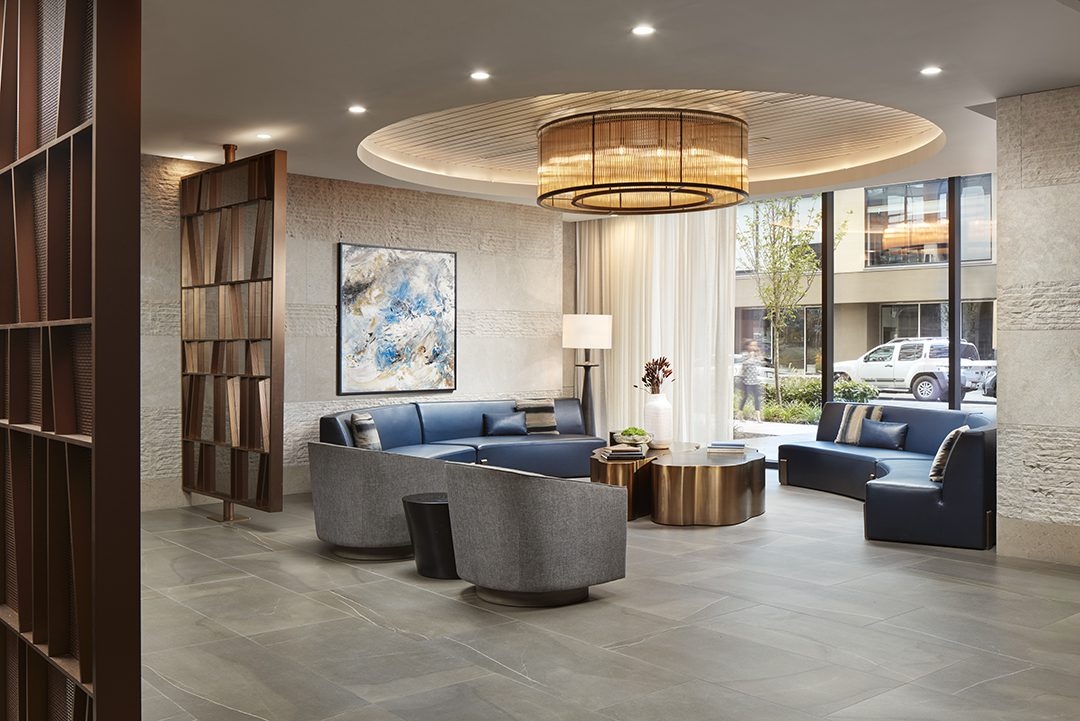
Business hotel public areas are designed for efficiency and flexibility. Lobby seating, waiting areas, and meeting zones prioritize durability, ease of movement, and quick turnover. Furniture is often modular, allowing spaces to adapt to varying guest flows throughout the day.
4.2 Experience-Driven Furniture in Resort Common Areas
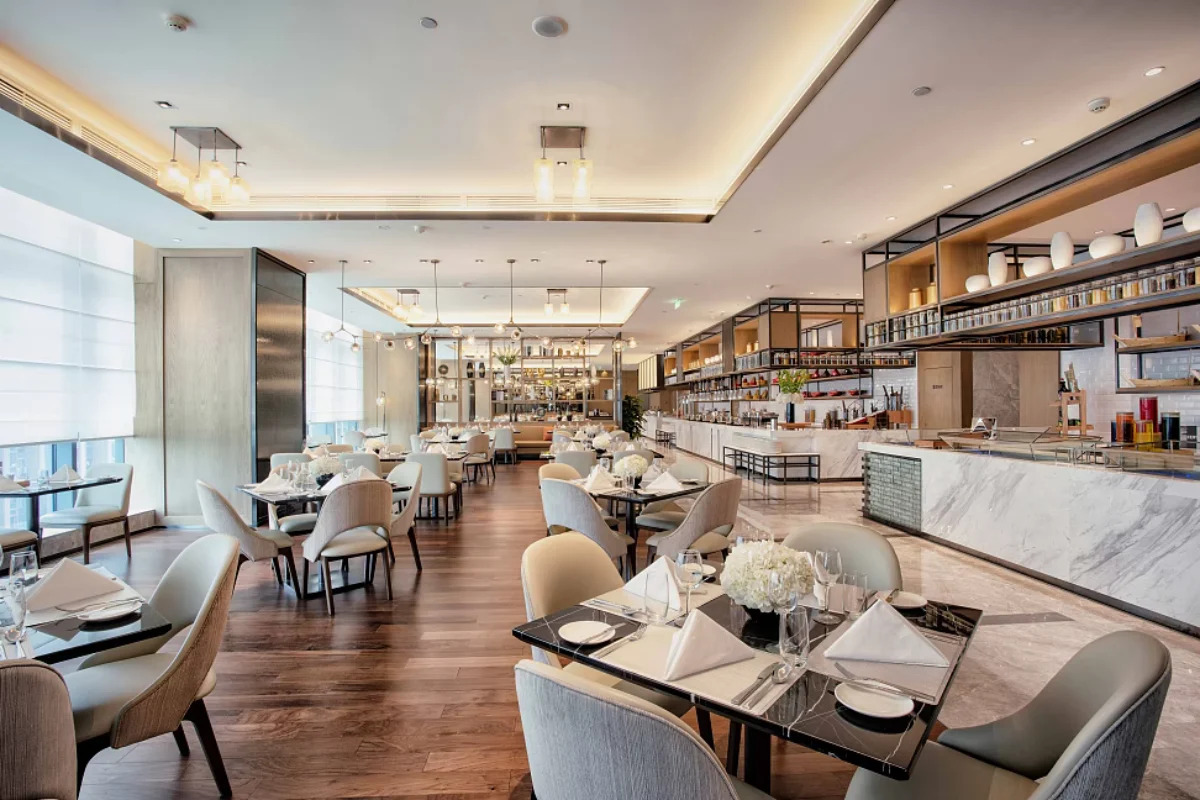
In resort settings, public spaces are destinations rather than transitions. Furniture in lounges, poolsides, and restaurants is selected to encourage lingering, interaction, and emotional connection. Comfort, material richness, and spatial rhythm take precedence over rapid circulation.
4.3 Flexibility and Zoning Differences
Business hotels favor furniture layouts that can be reconfigured quickly to support meetings or co-working. Resorts use furniture zoning to create layered experiences, guiding guests through spaces without emphasizing operational efficiency.
5. Manufacturing and OEM Considerations for Each Hotel Type
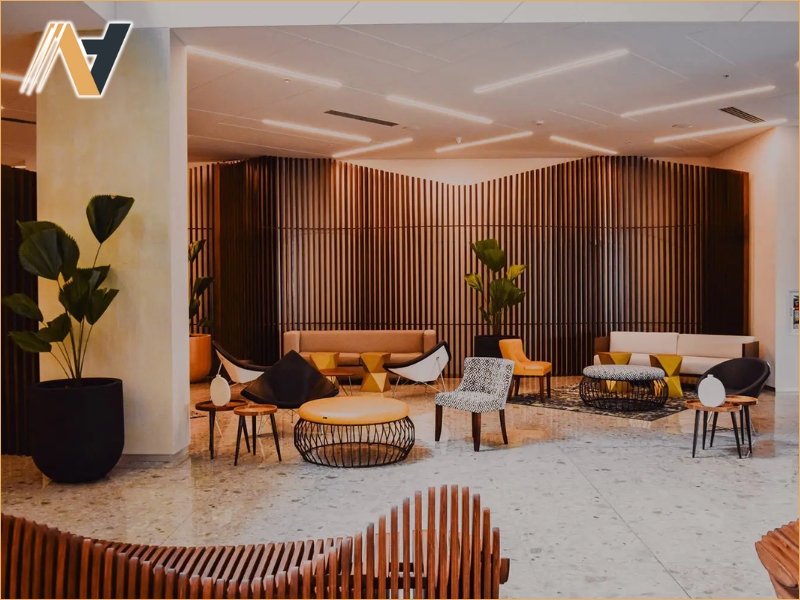
Furniture manufacturing strategies differ significantly between business hotels and resort hotels. These differences stem from scale, customization levels, and how closely furniture must align with operational models. OEM decisions play a critical role in translating design intent into functional, long-lasting interiors.
5.1 Standardization and Scalability for Business Hotels
Business hotels often require high levels of standardization to support multi-property rollouts and consistent brand identity. Furniture is designed for repeatability, efficient production, and easy replacement, allowing operators to manage costs while maintaining uniform quality across locations.
5.2 Customization and Craftsmanship in Resort Furniture
Resort hotels prioritize individuality and a strong sense of place. Furniture manufacturing leans toward customization, material expression, and crafted details that enhance the guest experience. OEM partners must accommodate bespoke dimensions, finishes, and design narratives.
5.3 Aligning Furniture Strategy With Operational Models
Successful hotel interiors result from aligning furniture design with how the property operates daily. Business hotels benefit from OEM solutions optimized for efficiency and lifecycle management, while resorts rely on manufacturing partners capable of balancing durability with experiential design.
Conclusion
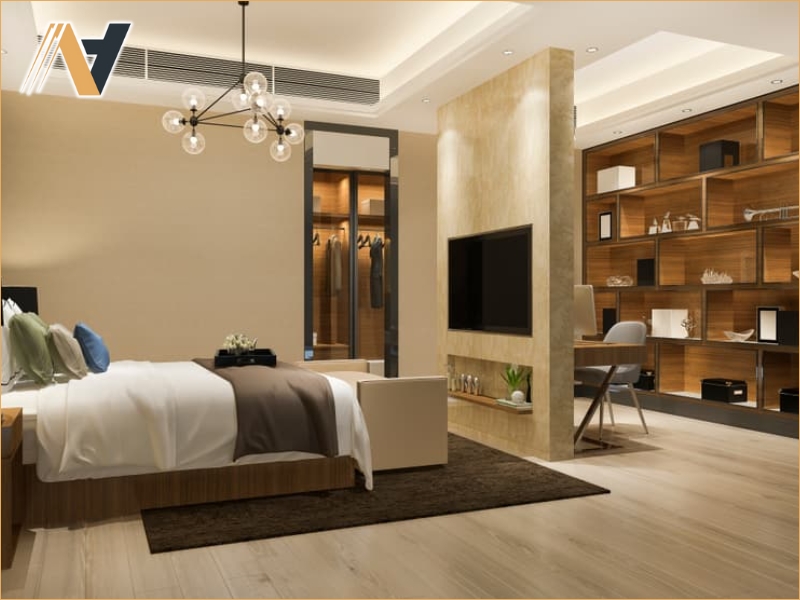
The differences between business hotel furniture and resort hotel furniture go far beyond style preferences. They reflect distinct guest behaviors, operational priorities, and long-term performance expectations. Business hotels rely on efficiency, durability, and standardization to support fast-paced stays, while resort hotels invest in comfort, spatial experience, and material expression to enhance extended leisure.
By aligning furniture strategy with each hotel model and working closely with experienced manufacturers like Ngoc Hoang Anh, developers can ensure interiors that perform as intended. Thoughtfully produced Vietnam hotel furniture plays a vital role in balancing functionality, brand identity, and lasting guest satisfaction across both hospitality segments.
-----
NGOC HOANG ANH TRADING COMPANY LIMITED
Tax Code: 3702874413
Address: No. 288/28/10 Huynh Van Luy Street, Zone 7, Phu Loi Ward, Ho Chi Minh City, Vietnam
Warehouse: No. 1/91, Thuan Giao 02 Street, Binh Thuan 2 Residential Quarter, Thuan Giao Ward, Ho Chi Minh City, Vietnam
Phone/Whatsapp/Wechat: +84342076666
Email: info@ngochoanganh.com.vn