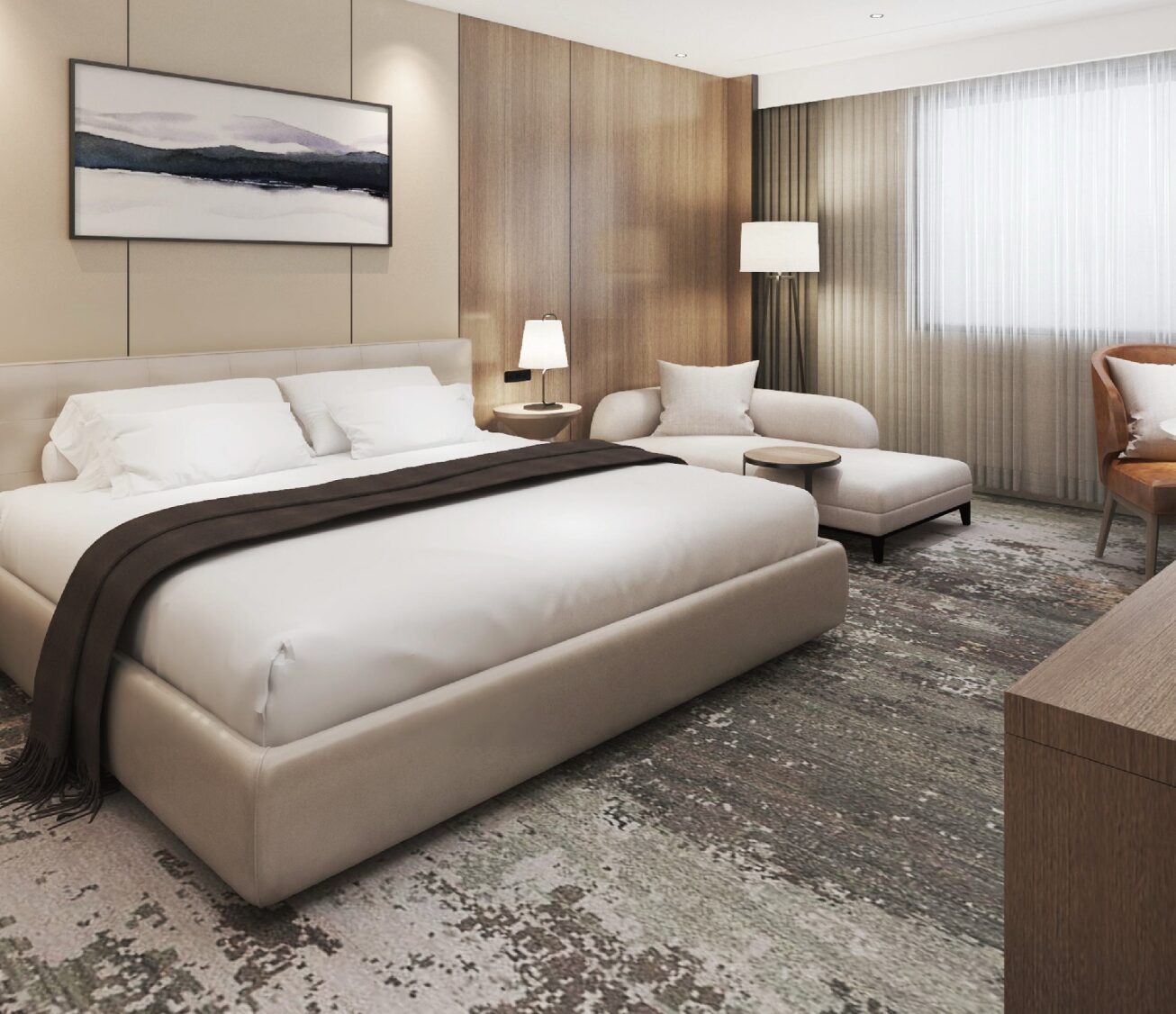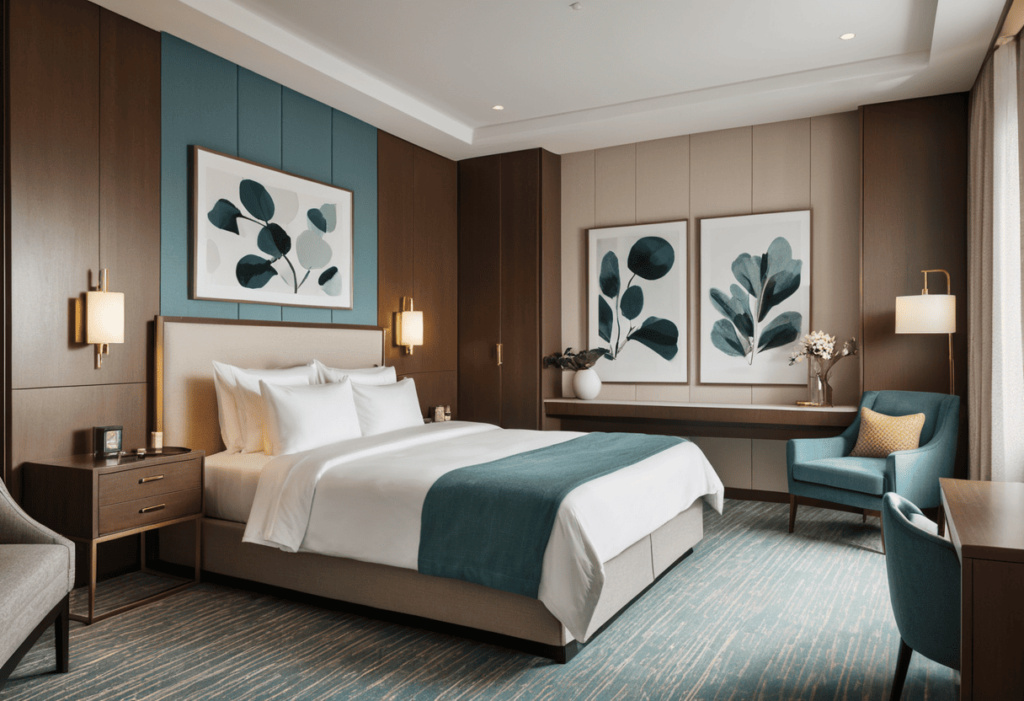
Airport Hotels Require a Different Furniture Strategy Than City Hotels
Thứ 4, 28/01/2026
Administrator
290
Airport hotels are more than transit accommodations, they operate under a distinct rhythm shaped by short stays and constant guest movement. Furniture in these spaces must balance durability, clarity, and immediate comfort. In this article, Ngoc Hoang Anh explores how airport hotel interiors differ fundamentally from city center hotels in both function and design intent.
1. Short-Stay Guests Change the Role of Furniture
Airport hotels primarily serve guests who arrive late, depart early, and interact with the room for only a few hours. In this context, furniture is not meant to invite exploration or emotional engagement. Instead, it must deliver immediate comfort, intuitive usability, and visual calm the moment the guest enters the space.
1.1 Comfort Is Expected, Not Explored
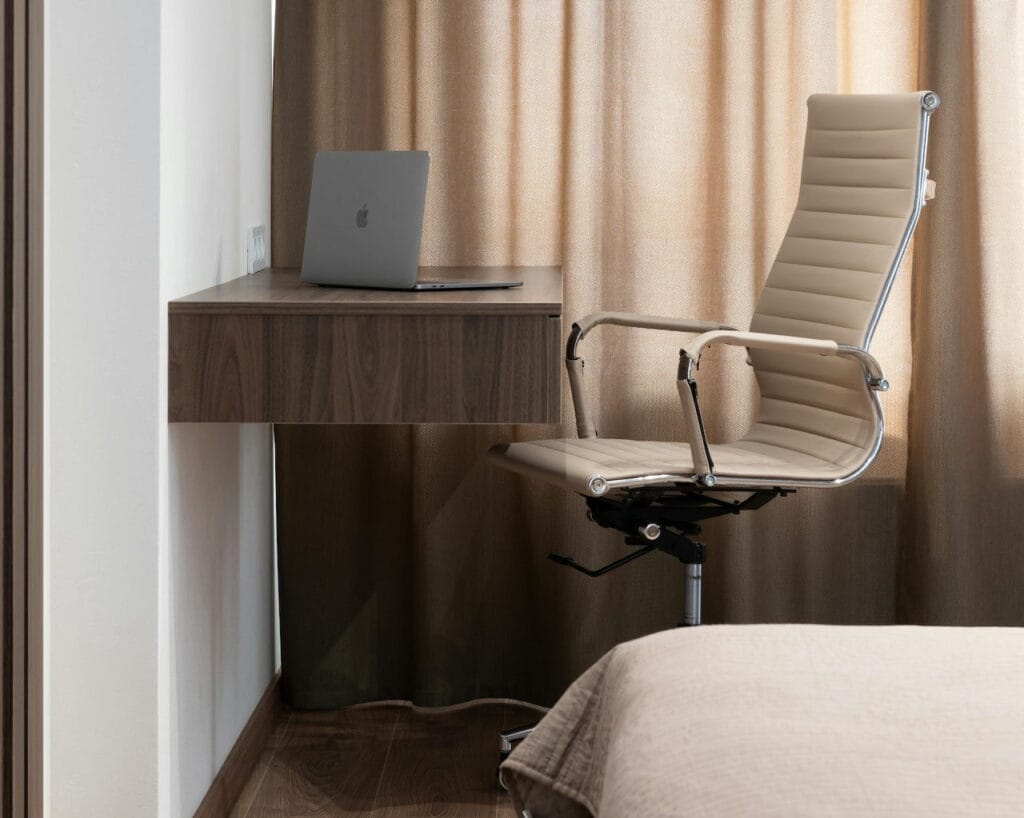
Transit guests rarely spend time discovering design details. Seating, beds, and work surfaces must feel comfortable at first use, without requiring adjustment or learning. Furniture succeeds when it disappears into the background, supporting rest rather than drawing attention.
1.2 Furniture Becomes a Support Tool, Not a Feature
Unlike city center hotels, where statement pieces help define brand identity, airport hotel furniture plays a quieter role. Each item exists to support sleep, brief work sessions, and efficient departure, prioritizing function and reliability over decorative expression.
2. High Guest Turnover Accelerates Furniture Fatigue
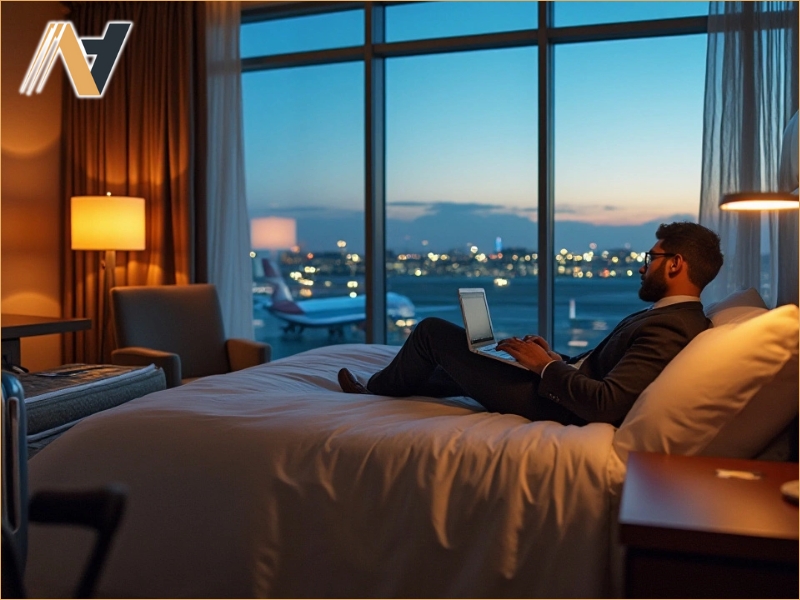
Airport hotels experience a constant cycle of check-ins and check-outs, placing unusual pressure on interior furnishings. Furniture in these environments must withstand frequent use, rapid cleaning routines, and minimal recovery time, making durability a central design consideration rather than a secondary concern.
2.1 Faster Wear Cycles in Airport Properties
Chairs, beds, and casegoods in airport hotels are used intensively, often by multiple guests within a single day. This accelerated wear cycle demands construction methods and joinery that remain stable under repeated stress, unlike city center hotels where usage is more distributed.
2.2 Materials Chosen for Endurance, Not Delicacy
Finishes in airport hotels favor resistance over refinement. Scratch-tolerant surfaces, reinforced edges, and impact-resistant materials reduce visible aging, ensuring furniture maintains a consistent appearance despite heavy turnover.
2.3 Maintenance Efficiency Shapes Design Decisions
Furniture must support swift housekeeping and technical servicing. Simple forms, accessible components, and standardized parts allow airport hotels to maintain operational continuity, while city hotels can afford more intricate detailing and longer maintenance windows.

3. Room Layouts Prioritize Movement Over Atmosphere
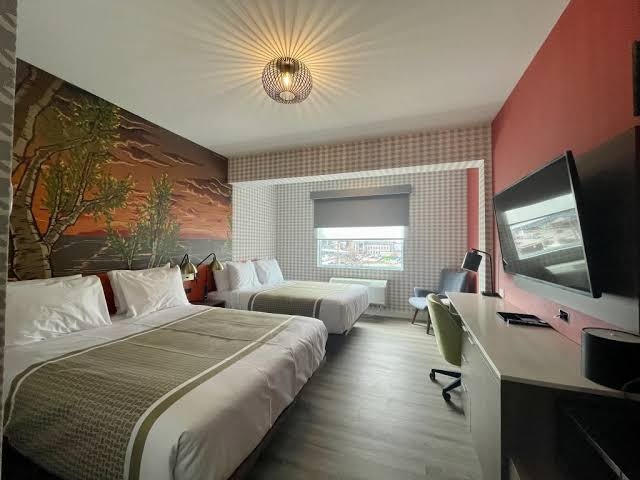
In airport hotels, guest rooms are designed around efficiency rather than immersion. Furniture placement must support quick orientation, clear pathways, and seamless movement, especially for guests arriving late at night or departing with luggage in the early hours.
3.1 Clear Circulation for Luggage and Night Arrivals
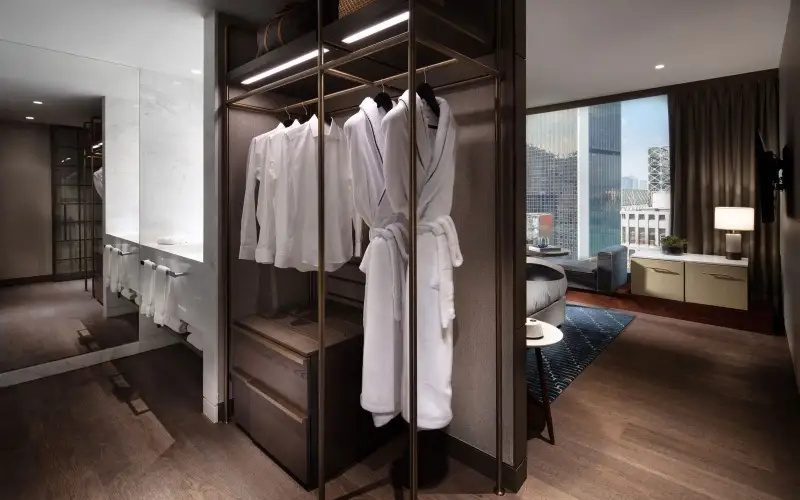
Wide walking paths, unobstructed door zones, and logically placed furniture reduce friction the moment guests enter the room. Beds, desks, and wardrobes are positioned to accommodate rolling luggage and low-light conditions without compromising safety.
3.2 Reduced Decorative Density in Furniture Placement
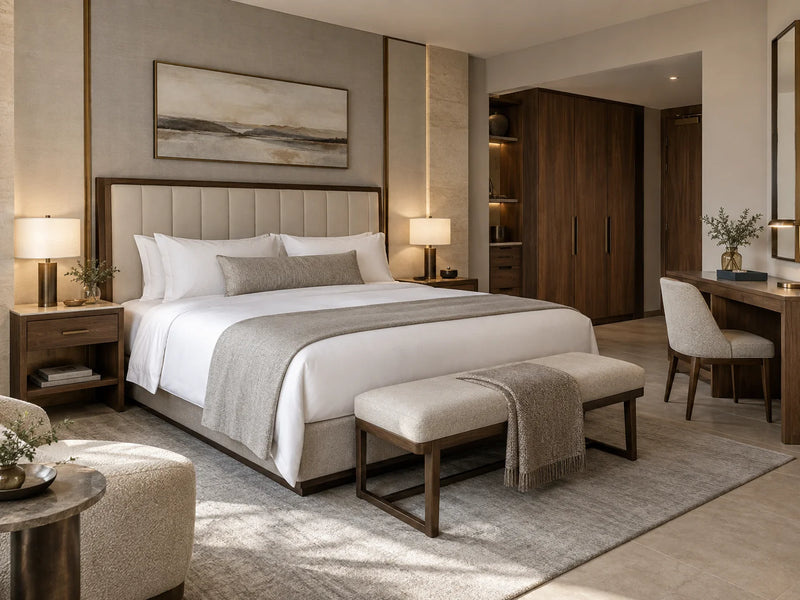
Airport hotel interiors avoid excessive layering of furniture and accessories. By limiting visual and physical clutter, the room feels calmer and easier to navigate, contrasting with city center hotels where denser layouts enhance atmosphere and experiential depth.
4. Furniture Supports Rest Amid Noise and Irregular Lighting
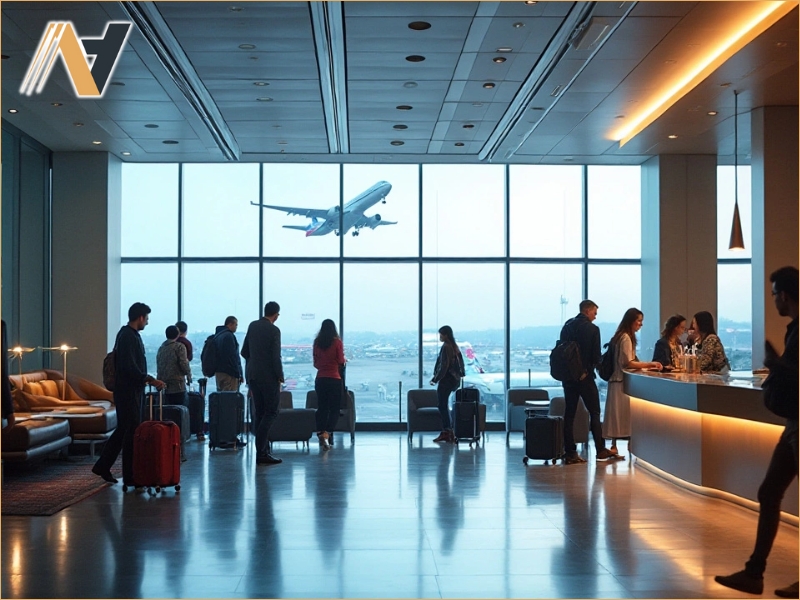
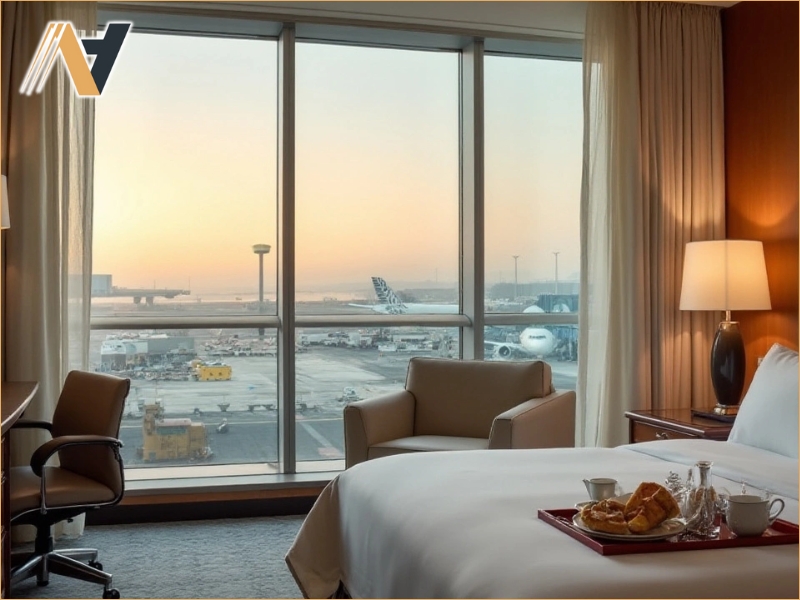
Airport hotels operate in environments shaped by aircraft noise, artificial lighting, and round-the-clock activity. Furniture plays a subtle but critical role in mitigating these external factors, helping guests achieve rest despite conditions that differ greatly from city center settings.
4.1 Sound-Absorbing Elements Integrated Into Furniture
Headboards, upholstered panels, and built-in casegoods can be designed to soften ambient noise. In airport hotels, these elements are treated as functional necessities, whereas city hotels may rely more heavily on architectural or decorative solutions.
4.2 Furniture Aligned With Non-Standard Sleep Patterns
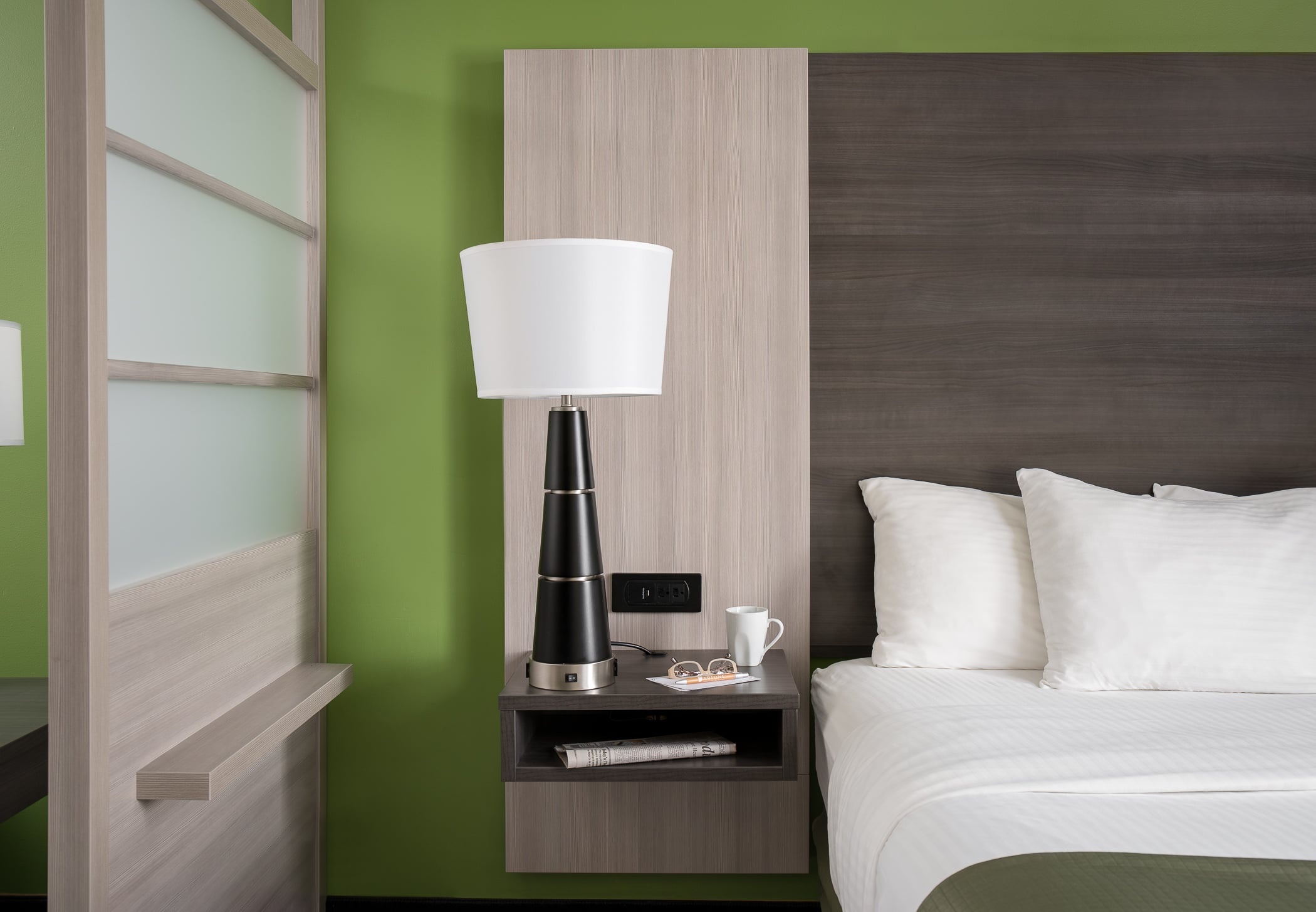
Lighting-integrated furniture, blackout-supporting wardrobes, and bedside layouts that minimize disturbance allow guests to rest at unconventional hours. The focus remains on immediate sleep quality rather than creating layered lighting scenes for extended stays.
5. Location-Driven Identity Shapes Furniture Decisions
The identity of an airport hotel is defined less by storytelling and more by reliability. Furniture choices reflect this positioning, reinforcing a sense of consistency and operational confidence rather than emotional immersion, which remains a key focus in city center hotels.
5.1 Airport Hotels Communicate Efficiency and Dependability
Furniture in airport properties emphasizes neutral forms, stable proportions, and familiar layouts. This predictability reassures transit guests, allowing them to focus on rest and timing rather than navigating an expressive interior environment.
5.2 City Center Hotels Express Brand Character Through Design
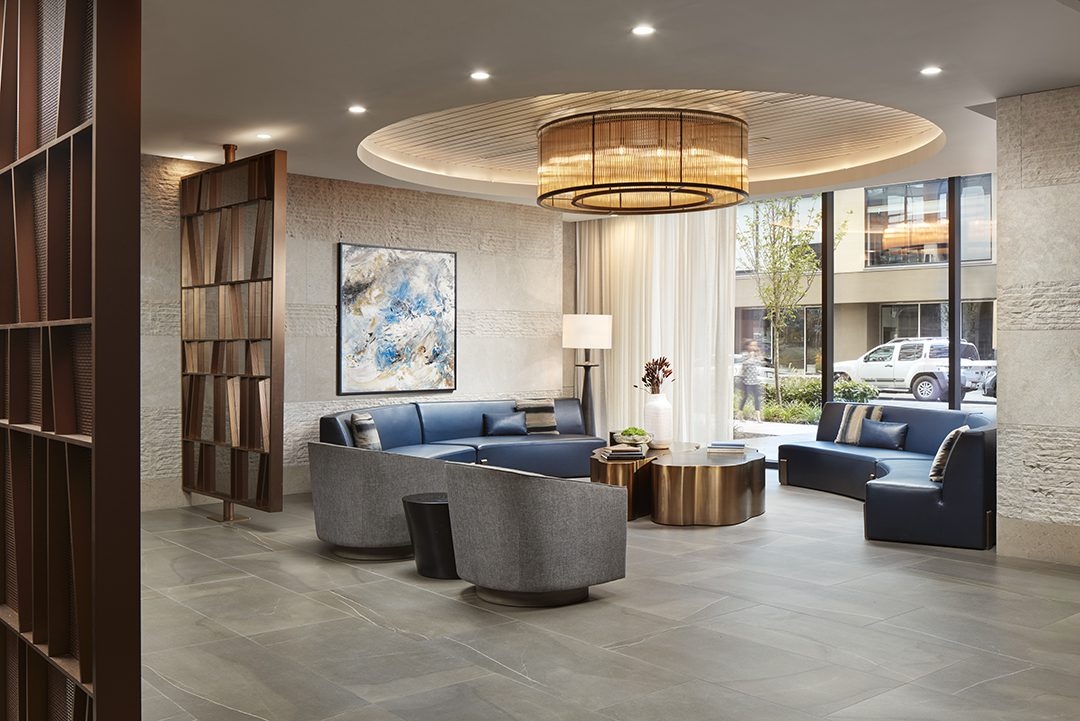
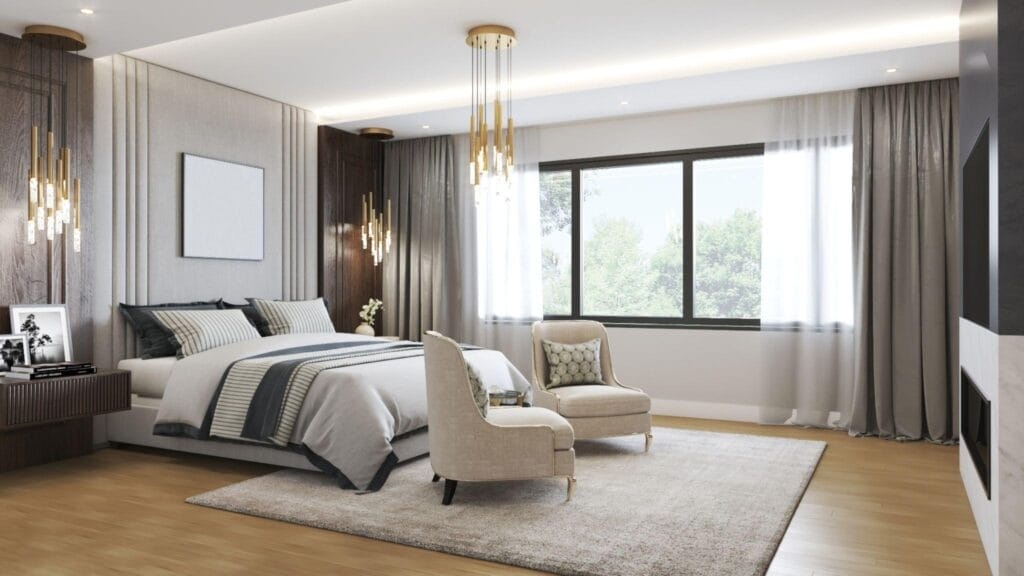
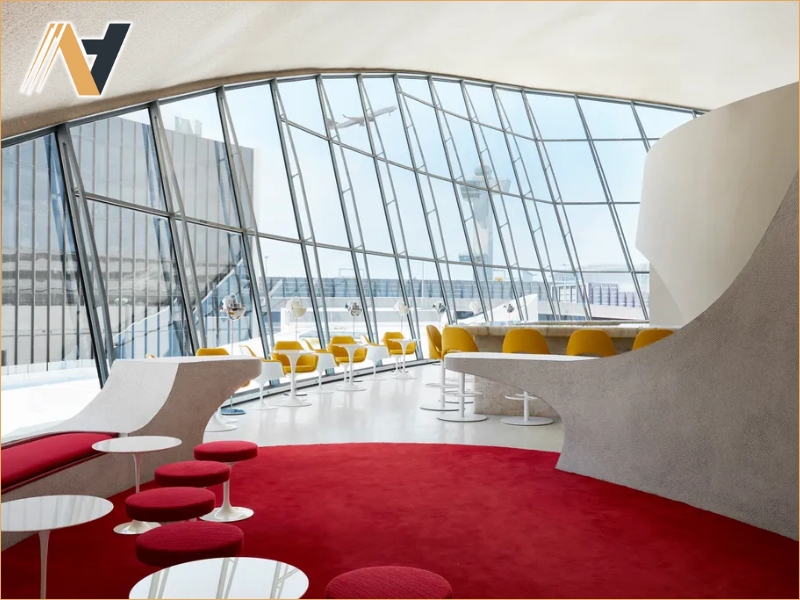
In contrast, city hotels use furniture to convey personality and local context. Bespoke shapes, refined finishes, and layered compositions become tools for differentiation, supporting longer stays and deeper guest engagement.
5.3 OEM Customization Responds to Operational Context
From an OEM perspective, airport hotel furniture is engineered for standardization and repeatability, while city center projects allow greater flexibility in customization. Understanding these distinctions enables manufacturers to deliver solutions aligned with each hotel’s functional and branding goals.
Conclusion
When approached with the right understanding of guest behavior and operational demands, furniture becomes a strategic asset rather than a decorative choice. Airport hotels require interiors that emphasize clarity, durability, and immediate comfort, while city center hotels rely on furniture to build atmosphere and brand distinction. Recognizing these differences allows each hotel type to perform at its best.
For operators and developers seeking tailored, high-performance solutions, Ngoc Hoang Anh delivers premium Vietnam hotel furniture designed to meet the distinct functional and branding needs of both airport and city center hospitality environments.
Contact us today for expert consultation and bespoke hospitality furniture production.
-----
NGOC HOANG ANH TRADING COMPANY LIMITED
Tax Code: 3702874413
Address: No. 288/28/10 Huynh Van Luy Street, Zone 7, Phu Loi Ward, Ho Chi Minh City, Vietnam
Warehouse: No. 1/91, Thuan Giao 02 Street, Binh Thuan 2 Residential Quarter, Thuan Giao Ward, Ho Chi Minh City, Vietnam
Phone/Whatsapp/Wechat: +84342076666
Email: info@ngochoanganh.com.vn