Interior Design Strategies to Reduce Housekeeping Cart Noise in Hotels
Thứ 4, 14/01/2026
Administrator
304
Housekeeping carts are essential to daily hotel operations, yet the noise they create often becomes a hidden source of guest disturbance. Corridor acoustics, flooring materials, furniture placement, and wall finishes all influence how trolley noise travels through a hotel. This article from Ngoc Hoang Anh explores interior design strategies that help reduce housekeeping cart noise while supporting efficient operations.
1. Flooring Materials That Minimize Rolling Noise
Flooring is the first and most influential element affecting housekeeping cart noise. The interaction between cart wheels and floor surfaces determines how much sound is generated and how far it travels through hotel corridors and guestroom areas.
1.1 Carpet Tiles and Soft Flooring Solutions
Carpet tiles are one of the most effective solutions for reducing rolling noise from housekeeping carts. Their soft surface absorbs vibration and dampens sound, significantly lowering noise levels compared to hard flooring. Modular carpet tiles also allow easy replacement in high-traffic zones without disrupting overall corridor aesthetics.
1.2 Acoustic Vinyl and Rubber Flooring
Acoustic vinyl and rubber flooring provide a balance between durability and sound absorption. These materials reduce vibration transfer from cart wheels while remaining easy to clean and maintain, making them suitable for service corridors and guestroom approaches where hygiene and noise control are equally important.
1.3 Avoiding Hard, Reflective Floor Surfaces
Hard surfaces such as polished stone, ceramic tile, or untreated concrete amplify rolling noise and create sound reflection along corridors. When these materials are unavoidable for design reasons, they should be combined with acoustic underlay systems to reduce noise transmission.
2. Corridor Width and Layout Planning
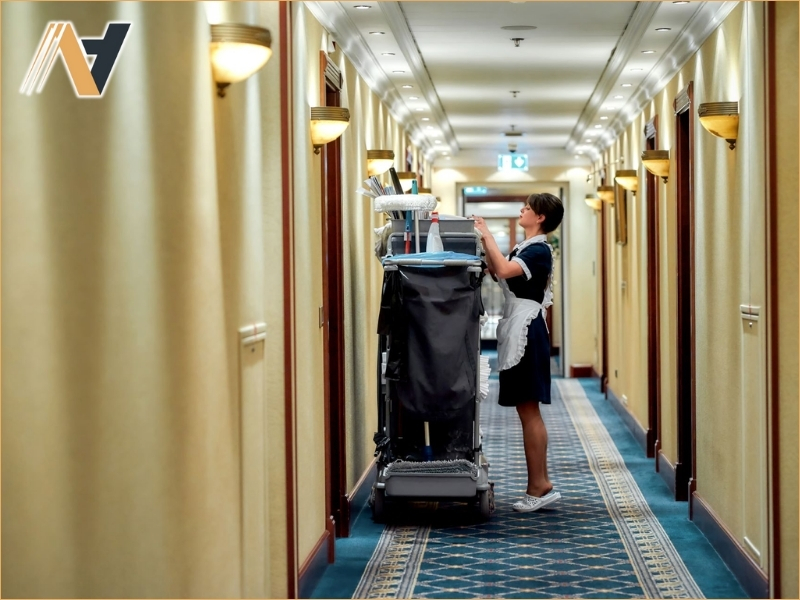
Beyond surface materials, corridor dimensions and spatial layout strongly influence how housekeeping cart noise is generated and transmitted. Poorly planned corridors force carts to maneuver awkwardly, increasing friction, vibration, and impact noise.
2.1 Adequate Corridor Width for Smooth Cart Movement
Corridors designed with sufficient width allow housekeeping carts to move smoothly without scraping walls or making abrupt directional adjustments. When carts can roll in a straight, controlled path, wheel vibration and rattling noise are significantly reduced.
2.2 Minimizing Tight Turns and Obstructions
Sharp corners, narrow pinch points, and poorly placed architectural elements force carts to slow down and pivot frequently. These stop-and-turn movements increase wheel friction and structural noise, making sound more noticeable near guestrooms.
3. Wall and Ceiling Treatments That Absorb Sound
While flooring addresses noise at its source, wall and ceiling treatments determine how sound travels and reverberates through hotel corridors. Soft, absorptive surfaces help prevent housekeeping cart noise from bouncing and amplifying.
3.1 Upholstered Wall Panels and Soft Finishes
Upholstered wall panels, fabric-backed wallcoverings, or padded decorative panels absorb mid- and high-frequency sound generated by rolling carts. These treatments reduce echo and soften overall corridor acoustics without compromising design quality.
3.2 Acoustic Ceiling Systems in Guestroom Corridors
Acoustic ceiling tiles or perforated ceiling systems help capture sound that would otherwise reflect downward along hard corridor surfaces. Proper ceiling absorption significantly reduces perceived noise levels outside guestrooms.
3.3 Reducing Sound Bounce in Long Corridors
Long, straight corridors act as sound channels when surfaces are reflective. Introducing absorptive wall sections or alternating materials along the corridor length breaks sound travel paths and limits noise propagation.
4. Furniture and Built-In Elements as Sound Buffers
Beyond architectural finishes, furniture and built-in elements can play an important role in interrupting sound transmission. When thoughtfully integrated, these elements help absorb and diffuse housekeeping cart noise along corridors.
4.1 Casegoods Placement Along Corridor Walls
Built-in cabinets, decorative shelving, or console elements placed along corridor walls act as physical sound buffers. These elements break up flat wall surfaces, reducing sound reflection and limiting how far rolling noise travels.
4.2 Recessed Doors and Soft Edge Detailing
Door frames, skirting, and corner details designed with recessed profiles or soft edge materials help reduce impact noise when carts pass close to guestrooms. These details minimize hard contact points that amplify sound during daily operations.
5. Designing with Housekeeping Workflow in Mind
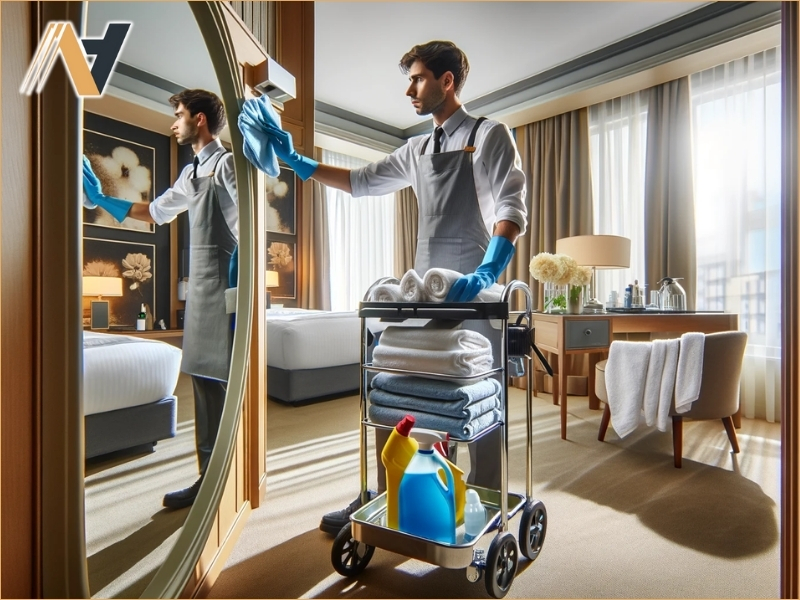
Reducing housekeeping cart noise is not only a matter of materials and finishes, but also of operational planning. When interior design aligns with housekeeping workflows, noise is minimized at the source rather than treated as a secondary issue.
5.1 Dedicated Service Routes and Back-of-House Planning
Providing clear service routes separated from guest circulation helps limit cart movement near occupied rooms. Dedicated back-of-house corridors allow housekeeping teams to operate efficiently while reducing noise exposure in guest-facing areas.
5.2 Smooth Transitions Between Different Floor Zones
Abrupt transitions between flooring materials often create vibration and impact noise. Designing smooth, level transitions between zones allows carts to roll quietly and prevents sudden sound spikes near guestrooms.
5.3 Reducing Stop-and-Go Movement Near Guestrooms
Layouts that minimize frequent stopping, turning, or repositioning near guestroom doors reduce noise peaks. Continuous, uninterrupted cart movement generates less sound and supports calmer corridor environments during service hours.

Conclusion
Housekeeping cart noise is often the result of design decisions made long before hotel operations begin. Flooring selection, corridor layout, acoustic wall and ceiling treatments, and the strategic placement of furniture all influence how sound is generated and transmitted. When these elements are thoughtfully coordinated, hotels can significantly reduce noise disturbance without compromising operational efficiency.
By approaching interior design with both guest experience and housekeeping workflow in mind, hotels create quieter, more comfortable environments while supporting smooth daily operations. With expertise in developing performance-driven Vietnam hotel furniture and interior solutions, Ngoc Hoang Anh helps hotels integrate acoustic awareness into design from the earliest planning stages.
Contact us today for expert consultation and bespoke hospitality furniture production.
-----
NGOC HOANG ANH TRADING COMPANY LIMITED
Tax Code: 3702874413
Address: No. 288/28/10 Huynh Van Luy Street, Zone 7, Phu Loi Ward, Ho Chi Minh City, Vietnam
Warehouse: No. 1/91, Thuan Giao 02 Street, Binh Thuan 2 Residential Quarter, Thuan Giao Ward, Ho Chi Minh City, Vietnam
Phone/Whatsapp/Wechat: +84342076666
Email: info@ngochoanganh.com.vn